Why Limestone Slurry Beats Traditional Mudjacking
Discover why limestone slurry outperforms traditional mudjacking for concrete leveling. Compare weight, durability, and environmental impact.
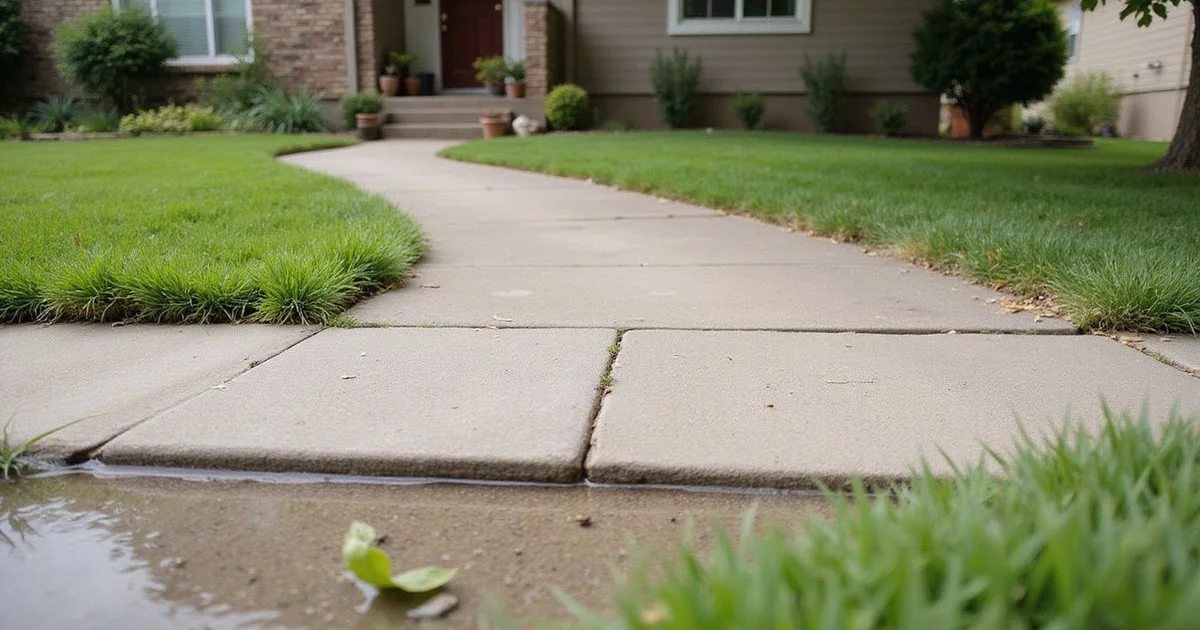
Mudjacking has been the standard concrete leveling method for decades. It is affordable, effective in many climates, and widely available. But here in Colorado Springs, we face soil conditions and weather patterns that demand more than just a standard fix. Traditional mudjacking often struggles to hold up against our region’s specific challenges.
Limestone slurry offers a modern solution designed to handle these exact issues. We aren’t writing this to sell you a product you don’t need. Our goal is to share the technical reality we see every day after fixing thousands of failed mudjacking jobs across El Paso County.
The Material Difference
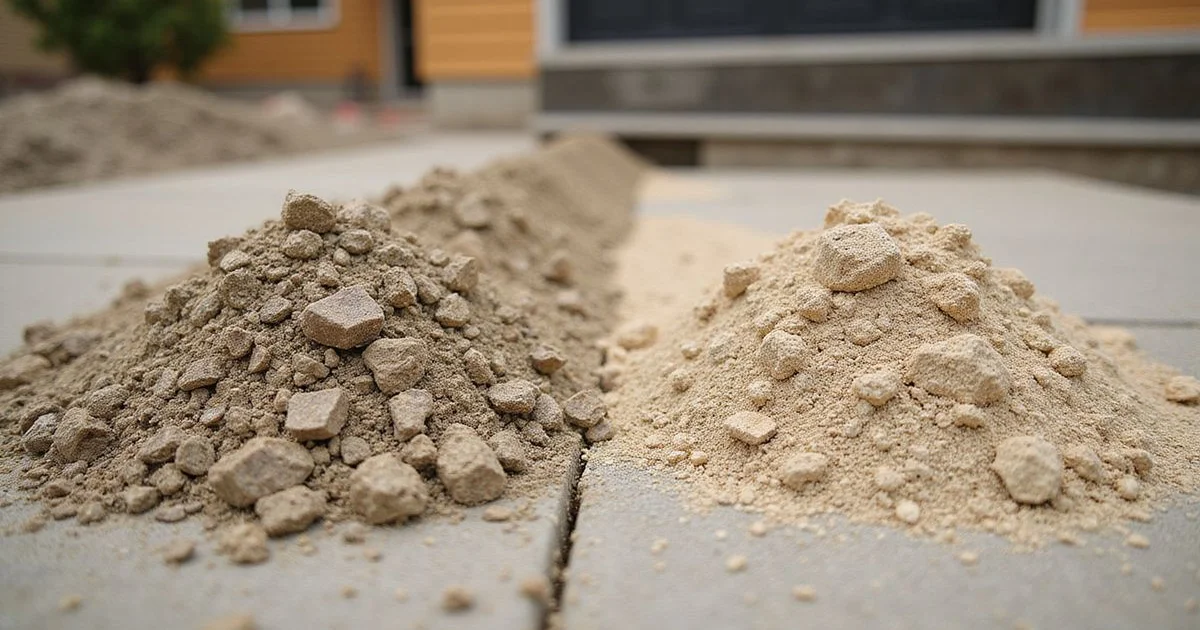
You need to know exactly what is going under your driveway or sidewalk. The composition of the fill material determines how long the repair will last.
Traditional Mudjacking Slurry
A typical mudjacking mixture relies on local soil. The usual recipe includes:
- Topsoil or native soil: 40 to 60 percent
- Sand: 20 to 30 percent
- Portland cement: 10 to 15 percent
- Water: 15 to 25 percent
This mixture results in a heavy material. It typically weighs 100 to 120 pounds per cubic foot when wet. The compressive strength usually tops out around 150 to 300 PSI after it fully cures.
Limestone Slurry
Our limestone slurry takes a different approach. We engineered this mix to prioritize stability over bulk:
- Crushed limestone aggregate: 60 to 70 percent
- Portland cement: 20 to 25 percent
- Water: 10 to 15 percent
- Mineral additives: Trace amounts for flow and curing
This material is significantly lighter. It weighs approximately 70 to 85 pounds per cubic foot. That is roughly 30 percent lighter than traditional mud. The compressive strength is also far superior. It reaches 1,000 to 2,000 PSI after curing. That makes it 4 to 6 times stronger than traditional mud.
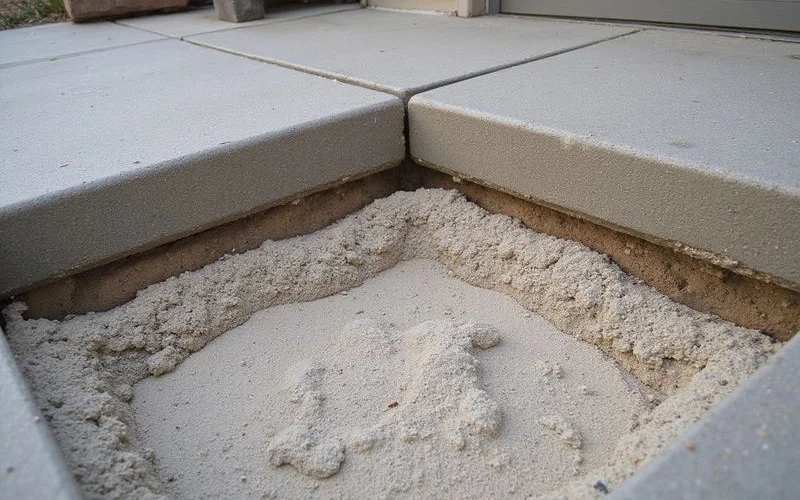
Weight: The Hidden Problem with Mudjacking
Weight is the single most overlooked factor in concrete repair. Slabs settle because the soil beneath them cannot support the load. Adding more weight to a failing base is often a mistake.
Traditional mudjacking pumps roughly 1,200 to 1,500 pounds of new material under a typical 10-by-12-foot slab. You are effectively placing a small car’s worth of weight onto soil that has already proven it cannot hold the concrete up.
The Pierre Shale Factor
This issue is critical in our region. Colorado Springs sits on top of complex soil formations like the Pierre Shale. These soils are rich in bentonite clay.
Bentonite swells when wet and shrinks when dry. Heavy loads exacerbate this movement. A lighter material like limestone slurry reduces the burden on these sensitive clays. It distributes the load evenly rather than punching through the soft spots.
Water Resistance and Erosion
Water is the enemy of any underground repair. Traditional mudjacking slurry contains a high percentage of soil. This means it behaves like soil when it gets wet.
Runoff from snowmelt or irrigation can wash traditional mud right out from under your slab. We call this “washout,” and it is a primary cause of recurring settlement.
Limestone slurry is different. It cures into a semi-crystalline matrix. Think of it as a low-grade concrete rather than compacted dirt. Water flows over it without breaking it down. This resistance is essential for homes in our area where drainage issues are common. For additional protection, we also recommend concrete sealing to shield the surface from moisture penetration.
Compaction and Settling Resistance
Mudjacking material often shrinks as it dries. The water in the mix evaporates and leaves behind small voids.
Vibration from traffic or construction can then cause the soil particles to settle further. This “secondary settling” is why many homeowners find themselves calling a contractor back after three to five years.
Limestone slurry is chemically designed to resist this compression. It cures into a rigid solid within 48 to 72 hours. A vehicle driving over a limestone-leveled driveway will not compress the material itself. If your slab moves again in ten years, it will be because the ground deep below it moved, not because the repair material failed.
Environmental Considerations
Sustainability is a practical concern for many of our neighbors. The two materials have very different environmental profiles.
Traditional Mudjacking Mud:
- Consumes topsoil, which is a valuable finite resource.
- Requires high water volume for mixing.
- Becomes contaminated waste if the slab is ever removed.
Limestone Slurry:
- Uses abundant mineral resources.
- Requires less water to mix and place.
- remains inert and recyclable as aggregate if the concrete is replaced.
Limestone slurry has a smaller ecological footprint. It solves the problem without depleting topsoil reserves.
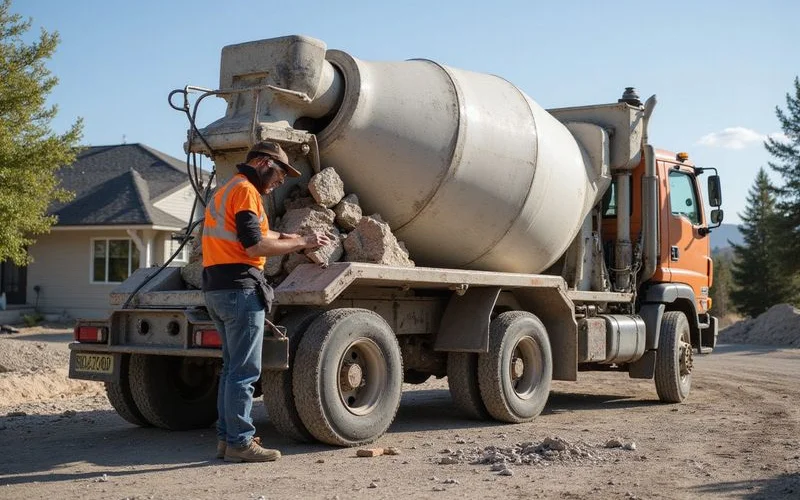
Longevity in Colorado Conditions
Laboratory data is useful, but real-world performance is what counts. We track our projects to see how they hold up against the elements.
The Freeze-Thaw Challenge
Colorado Springs experiences over 50 freeze-thaw cycles annually according to NOAA data. Water gets under the slab, freezes, expands, and then melts. This cycle tears weak materials apart.
Comparative Performance Data:
| Feature | Traditional Mudjacking | Limestone Slurry |
|---|---|---|
| Average Lifespan | 3 to 5 years | 8 to 15 years |
| 5-Year Failure Rate | Approx. 40-50% | Approx. 5-10% |
| Water Resistance | Low (Susceptible to washout) | High (Hydrophobic matrix) |
| Primary Weakness | Erosion & Compression | Extreme deep soil movement |
Limestone slurry consistently survives these harsh temperature swings better than soil-based mud.
Cost Comparison
Price is always a factor in home repairs. Mudjacking is almost always the cheaper option upfront.
You can expect to pay between $3 and $6 per square foot for traditional mudjacking in our area. Limestone slurry generally costs between $4 and $8 per square foot.
The Value Equation
A cheaper repair is not a bargain if you have to do it twice.
- Scenario A: You pay $600 for a mudjacking repair that lasts 4 years. That is $150 per year.
- Scenario B: You pay $900 for a limestone repair that lasts 10 years. That is $90 per year.
The limestone option saves you money over the decade. It also saves you the frustration of scheduling a second repair job.
When Mudjacking Still Makes Sense
We are honest about where limestone isn’t necessary. Traditional mudjacking can be a valid choice in specific situations:
- Short-term fixes: If you plan to tear out the driveway in two years, go with the cheaper option.
- Commercial scale: Massive warehouse floors where budget is the only metric may benefit from mudjacking.
- Perfect soil conditions: Areas with sandy, well-draining soil don’t punish mudjacking as severely as our clay soils do.
Limestone slurry provides better value for the vast majority of residential homes in El Paso County.
See the Difference for Yourself
You can get a permanent solution for your uneven concrete. We invite you to visit our driveway leveling services page to see examples of our work. We also offer specialized leveling for sidewalks, patios and porches, and pool decks.
Every project starts with a free on-site assessment. We provide a detailed written estimate so you know exactly what to expect. Our team has completed over 20,000 jobs, giving us the experience to help you make the right choice for your home.